Is Water Flossing Better Than String Flossing. It's proven to be effective in preventing gingivitis and gum. The basic idea of water flossing is to remove biofilm with a stream of water.
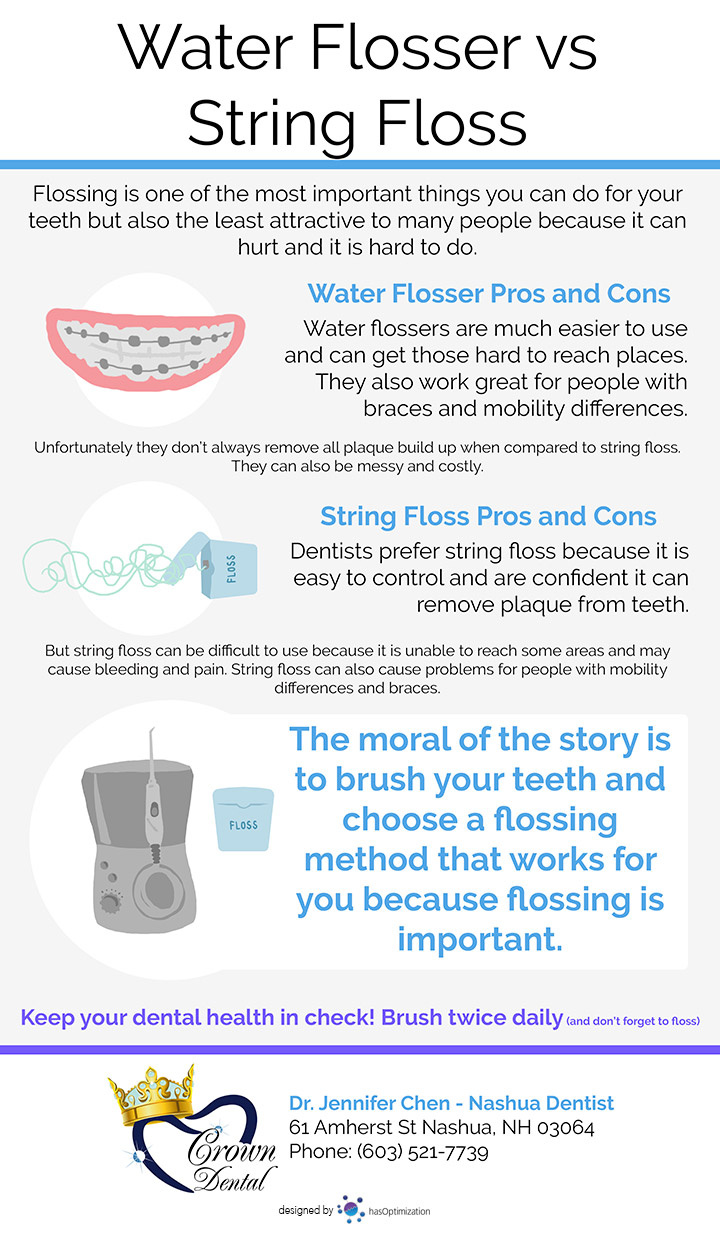
Water Flosser vs String Floss Which is better for your teeth? from www.crowndentalnashua.com Observing a Betta
The betta can also be referred to as the Siamese fighter fish. It's native to Southeast Asia, including Cambodia, Laos, Myanmar, Thailand, and Vietnam. It is one of the tropical fishes that prefers the freshwater aquarium with a excellent gravel substrate. It is noted for its beautiful colors and is considered to be an excellent pet for those who are new to the hobby.
Watching a betta
By watching a Betta, you better understand its behaviour. Bettas are naturally fascinated by the world around them. Any sudden change will get their attention. They also have the habit of watching. They'll stare at any move that might be food or a predator.
You can observe the betta's appearance by placing it in a betta tank alongside another Betta. Make sure you keep both the temperature and level of lighting identical. If you are able, observe the fish for between 30 and 60 minutes each day. Also, playing classical music can assist. When observing a betta, it's vital to spot behaviors that suggest that the fish is content and healthy.
A healthy betta should swim throughout the tank on daily schedule, communicating with the surrounding. It could be a slow swimmer or move swiftly from one side to the next. However, an unhealthy betta may be apathetic and remain at the bottom of the tank, and not show evidence of happiness.
The behavior of a betta is determined by the type of stress it faces. When the fish is aware of a threat, they may flare and fight. This is their way to eliminate the threat. They might flail at other animals, or even at their reflection. While this can be very stressful for the betta, a few instances of flaring can be managed.
Watching a wild betta
Watching a wild betta in the wild can be a fascinating experience. They are extremely curious and enjoy exploring their environment. While they're easy to care for however, you could be amazed by some of their interesting behaviours. Here are some of the warning signs to look for when you are in its natural environment:
Bettas are predators and frequently prey of other species, and are always aware of movements around them. This means that they're extremely alert, and can not move when watching. When you're observing the sea creature, keep your eyes out for any aggressive behavior that you notice.
If you're planning to see a wild betta, you'll need to learn about their environment. Bettas live in heavily structured habitats, meaning they don't require a lot of space. They spend most of their time hiding in vegetation. Their fins have a small size, which makes them difficult to discern. Furthermore, their muggy brown hue makes them difficult to spot.
Another sign of aging Bettas is the feeling of lethargy. Bettas that are young are likely to be active, however, if they appear to be sluggish, they could be showing signs of illness. Also, they might not be as enthusiastic about food items as they used to be. There is also an increase in their wiggle dances.
Inquiring about a captive beta
Being able to observe a captive betta is an excellent way to teach students about the biology of bettas. Bettas are tropical fish which prefer waters that are between 72 and 80 degrees Fahrenheit. They struggle with frigid water because it makes them tired and weakens the immune system. Regular water changes can stress them out. Their name originates form the Malay term "betah," which means "fighter," referring to their ability to withstand the harsh conditions of water.
It is possible to observe Betta's behavior in an aquarium to learn what makes it do better at swimming or behave in one manner. It is also possible to research its reactions to different elements in the environment, such as temperatures or rocks. You may also request you students to design their own research. They may be able to predict how the fish will react in different situations.
Another great way to learn about bettas is by observing their feeding habits. Bettas prefer floating pellets over fish flakes. They also need to come up to the surface with their labyrinths replenished, and they do not like the deep bottom.
Bettas are generally housed within tiny aquariums, but there are certain aspects to keep in mind when looking after one. Bettas are particularly vulnerable to many common freshwater fish illnesses. These include ich. This is also known as White Spot Disease, caused by the Ichthyophthirius multifiliis parasite. It can be found in numerous freshwater fish tanks. If this parasite infects fish, it creates white spots on its body, and they can be easily visible. The fish can also clamp its fins or hang listlessly on the top of the water.
Feeding a betta
Bettas need access to the water in order to breathe. The labyrinth of organs on the body of a betta allows it extract oxygen the air. This means that you don't have to purchase an air pump in order to keep your dog happy and healthy. Also, they require plenty of room to hide and swim. The larger the tank, the better.
Bettas can eat up to 3 pellets per meal. eat, so you'll need to to prepare enough food. It's also vital to take the time to soak dry food items prior. The right amount is essential for its health and well-being.
The excess food you feed your betta could cause digestive problems. If your pet eats too frequently, they'll experience constipation and this can cause a variety of health problems. It is also possible that your betta appears in a state of euphoria and will spend the majority the time in a semi-sleepy state. This could mean that your betta may be suffering from SBD or is consuming too much.
When choosing which food item to treat your baby betta to, be sure that the food you choose is high in nutrients and free the harmful bacteria. Bloodworms and brine shrimps are common in ponds or lakes and are an excellent supplement to the diet of your betta.
The observation of a betta
Observing a betta in its tank can be a fascinating experience. There is a wealth of information about the behavior of the animal as well as how it responds when exposed to types of stimuli. You can also draw the face of a beta and discuss its characteristics, colors, and measurements. You can contrast a male and female betta , and examine how they feed. Additionally, you can discover how different varieties and types of food affect the behavior of bettas.
Bettas do not reside in large pools, but prefer small, enclosed areas. Their habitat is a shallow body water that is rich in vegetation. They spend most of their lives hid within the bushes. They are therefore in constant contact with debris and leaves.
Bettas are indigenous to watery habitats that are shallow located in Southeast Asia. These animals are adapted to living in tiny quantities of water with low oxygen. Bettas have developed to live in these environments by developing an organ special to them, known as a labyrinth, that allows them to breathe air directly from the surface. Their diet is based on insects and their larvae.
Bettas can be quiet, but they can also be aggressive towards other fish. If you don't want to disrupt the peaceful life of your male Betta then it's best to place him or her in an individual tank. A male Betta is more likely to attack a male if it is nearby.
In the wild
The observation of a betta's natural habitat is a wonderful way to understand how it acts in nature. Bettas are territorial species. They will fight to establish their territories. Male or female, Bettas often ram or dive into other fish. They might also bite into the fins that other fish. To ensure their safety the bettas require their own comfortable location to hide. An aquatic cave or densely landscaped corner is a excellent spot for them.
You can watch a betta's behaviour to find out how happy or anxious it is. If it's anxious, it'll throw up, flake its fins, or in other ways react at your presence. If the fish seems unsatisfied or bored, they may even turn aggressive.
The betta is a decorative fish that is well-known throughout the world. The large fins of the betta will draw the attention of people. The aggressive nature of fish makes them often referred to as "fighting fish." The way you observe their behavior will help you evaluate their overall health condition and the mood of a particular fish, when fed.
The most important thing you should remember when looking at a betta the wild is that you observe the species carefully. Bettas can be found in a variety of colors, with the most common being blue, yellow, black white, albino, and clear. The male Betta is generally brighter than the female. Their fins may vary in length, and males often have longer fins than females. Additionally, they may have distinct tails that are prone to decay.
Water flossing is at its best when it's used together with string flossing. A water flosser, also known as an oral. Sonicare airfloss pro/ultra interdental cleaner,.
Overall, Most Dentists Recommend Traditional String Floss If It Is Accessible For Your Body.
Sonicare airfloss pro/ultra interdental cleaner,. However, the benefits don’t stop there. Fluids like to flow around things.
String Flossing Is Certainly Better Than Doing Nothing, As These Studies Show:
Both traditional string floss and water flossers are safe and effective to use. Both waterpiks and flossing are good ways to take care of. Before we delve into the science, it's important to state the following:
Great Dental Consideration Anticipates That You Should Floss.
Each method has its own advantages and weaknesses. Water floss is gentle enough for people who have sensitive teeth and gums. Water flossing is gentler on your teeth and gums.
A Water Pick, Also Known As An Oral Pulsating Irrigator, Is A Device That Aims A Stream Of Water At Your Teeth.
They provide 51% less risk of gingivitis. Over the course of 6 weeks, flossing and brushing reduced the depth of periodontal pockets by. But unlike string floss, a water flosser can be reused for several years with proper care and cleaning.
String Floss Is Simple, Easily Portable In Your Bag, And Inexpensive.
When you use an oral irrigation. It's proven to be effective in preventing gingivitis and gum. Using a fluid to break something up requires much more pressure in order to overcome this tendency to flow around things.
Share
Post a Comment
for "Is Water Flossing Better Than String Flossing"

Post a Comment for "Is Water Flossing Better Than String Flossing"